Abul Khair Group Reopens Four Closed Jute Mills
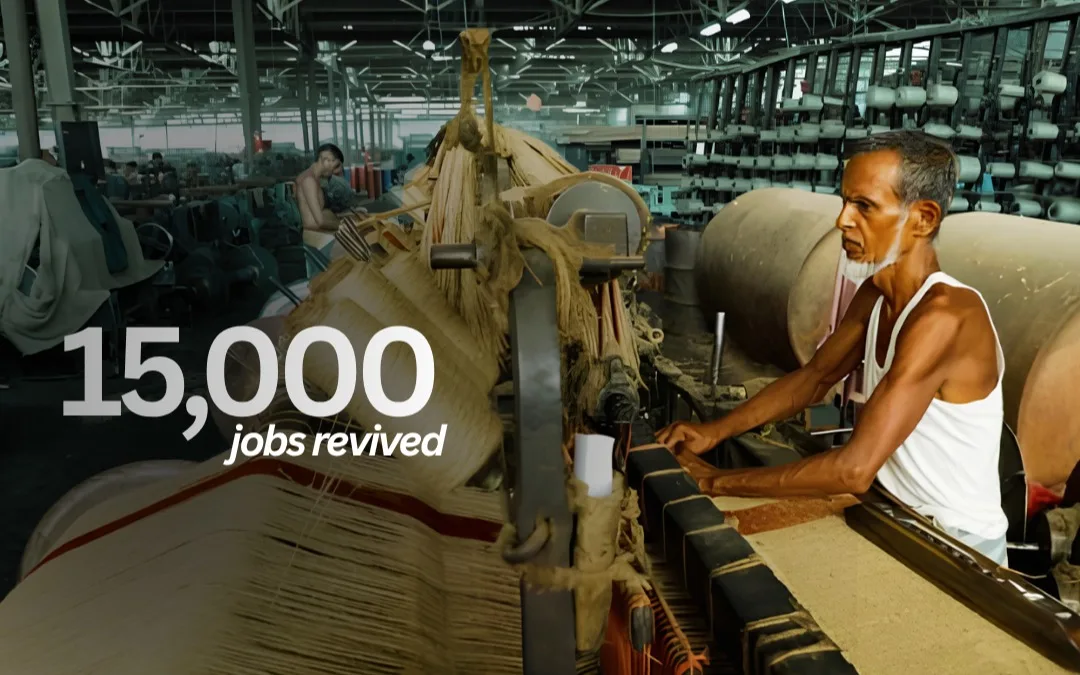
Abul Khair Group has reopened four previously closed private-sector jute mills through agreements with their owners, bringing around 15,000 workers back into employment. The group is producing jute yarn and other products through the mills, with exports already reaching Türkiye and China.
In a Nutshell:
- Abul Khair Group has reopened four closed private-sector jute mills through contractual agreements with their owners.
- The mills are Razzaque Jute Industries, Faridpur Jute Fibres, Dahmashi Jute Industries and AR Jute Mills.
- Around 15,000 workers are expected to benefit from the resumption of operations.
- Shah Agro Limited, a company owned by Abul Khair Group, is supplying jute to the mills and exporting the finished products.
- The group has set an annual export target of 80,000 tonnes of jute yarn and jute products from the four mills whose products are currently being exported to Türkiye and China.
- Discussions are underway with the owners of another two to three closed private-sector jute mills to restart their operations.
- Abul Khair Group has also applied to lease three to four closed government-owned jute mills and plans to move towards higher-value and diversified jute products in the future.
Context
The group entered the raw jute trading business last year before expanding into jute products. Instead of establishing new factories, agreements were made with owners of existing closed mills, allowing production to resume using those facilities. Under the arrangement, Abul Khair Group purchases and supplies the raw jute, while the mill authorities manage workers and production. The finished products are then exported by the group.
Why it matters
Global demand for eco-friendly alternatives to plastic has opened doors for higher-value jute products. Moving beyond traditional goods allows Bangladesh to attract more processing investments and earn far more from the raw material it already produces.
What we think
Reopening a closed factory instead of building a new one from scratch makes use of factories, workers and production infrastructure that already exist, while reducing the time and initial investment normally required to establish new mills and creating employment. Additionally, moving into higher-value jute products turns unused industrial capacity into a new export opportunity for us.