Germany Eyes Cooperation in Bhola Gas Extraction
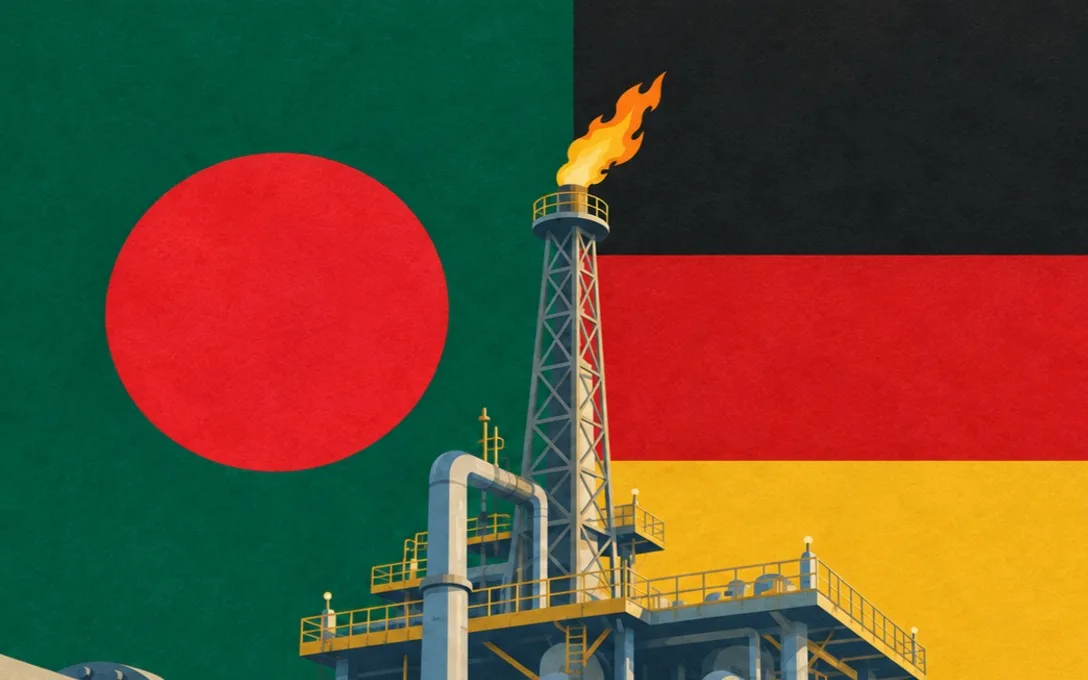
Germany is exploring closer cooperation with Bangladesh on natural gas extraction in Bhola, as a visiting parliamentary delegation discussed ways to support the country’s energy needs alongside broader economic and political engagement.
In a Nutshell
- A six-member German parliamentary delegation, led by Nicklas Kappe, visited Bangladesh from September 17 to 19.
- Germany and Bangladesh discussed possible cooperation in natural gas extraction in Bhola.
- The delegation also discussed trade, investment, energy cooperation, climate change, political developments and the Rohingya crisis.
- It visited German companies including Heidelberg Materials, CHT and Siegwerk, as well as the Meghna Industrial Economic Zone in Narayanganj.
- Both sides expressed interest in advancing discussions on a Free Trade Agreement between Bangladesh and the European Union.
- Germany expressed interest in Bangladesh’s large consumer market and labour force, while German businesses raised operational challenges in the country.
Context
The six-member delegation, led by Nicklas Kappe, a member of Germany’s Bundestag from the CDU/CSU, visited Bangladesh from September 17 to 19. During meetings with Bangladeshi officials, the two sides discussed possible German involvement in trade, investment, energy, climate change, political developments and the Rohingya crisis. Bhola emerged as a significant area of interest because of its known gas reserves.
Germany and Bangladesh have maintained diplomatic relations since 1972, and Germany has become one of Bangladesh’s major export markets. The recent discussions come at a time of persistent energy constraints for Bangladesh.
Why It Matters
Bangladesh’s energy demand is rising alongside industrial growth and higher electricity use. Yet output from existing gas fields is declining which increases its dependence on imported liquefied natural gas (LNG), which is often costly and exposed to global price swings. Developing Bhola’s gas reserves may help Bangladesh increase domestic supply, ease pressure on fuel imports and provide more reliable energy for factories, power generation and households while strengthening energy security and supporting industrial competitiveness and economic growth.
What We Think
For Bangladesh, this broader diplomatic engagement may develop into a practical partnership by addressing a major economic constraint like energy security. However, key details like how the extracted gas from Bhola may be shared remains unmentioned.
Therefore, the question remains, if this agreement protects Bangladesh’s interests by ensuring that the country retains the larger share of the gas to meet domestic energy needs or not?