"Jantar Mantar 2.0" Looms
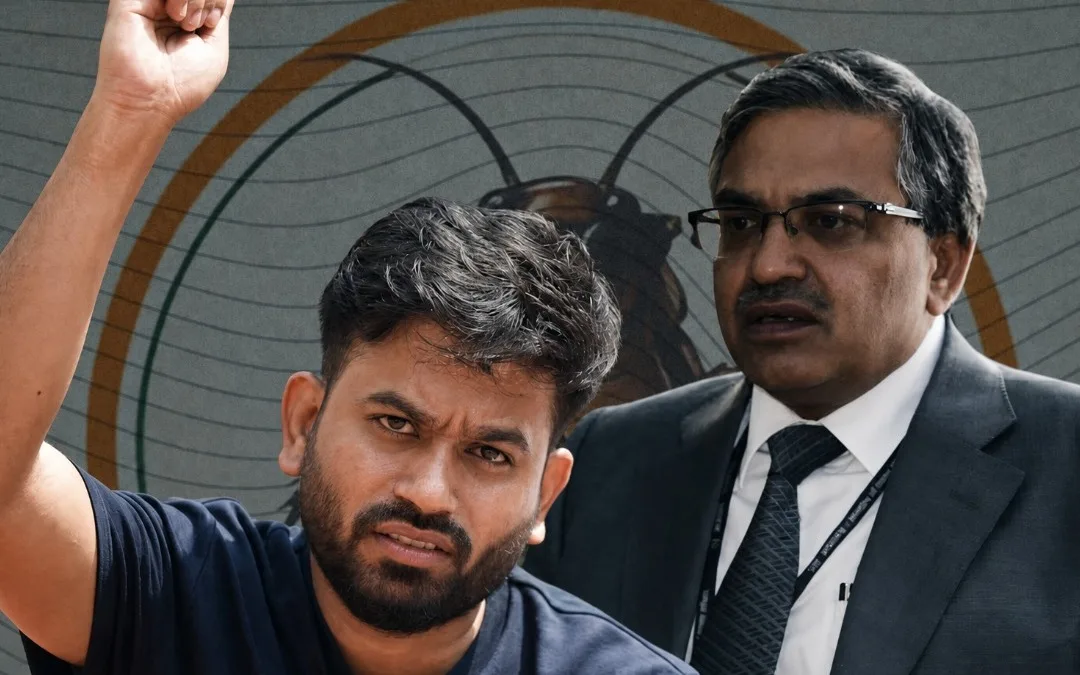
CJP has drawn a hard line: Chief Election Commissioner Gyanesh Kumar must quit within 48 hours or face nationwide street protests. Their demand comes packed with allegations of vote deletions, secret Delhi control, and welfare schemes at risk.
Reading
In a Nutshell:
- CJP founder Abhijeet Dipke set a 48-hour deadline on September 24 for CEC Gyanesh Kumar to resign, warning of nationwide "Jantar Mantar 2.0" protests if he refuses.
- CJP's three core demands: Kumar's removal with criminal proceedings against him, an immediate halt to all upcoming polls with an independent inquiry into the SIR process, and a new law to rebuild the Election Commission's credibility.
- The demand follows Indian Express reports showing two Election Commissioners objected 14 times in 10 months to how Kumar ran the voter-roll revision.
- CJP says over 13 crore voter names were deleted nationwide, a number larger than the vote gap between the ruling and opposition parties in the last election.
- CJP also asked the Supreme Court to seal all SIR files and take custody of them, "so that no one can claim a fire accident".
Context
This situation escalated after an Indian Express investigation revealed that Election Commissioners Sukhbir Singh Sandhu and Vivek Joshi formally objected 14 times in 10 months to decisions made during the Special Intensive Revision (SIR) of voter rolls. They assert that crucial decisions, including changing voter registration forms, removing millions of voters, and centralizing the database under official Seema Khanna in Delhi, were executed without their knowledge or consultation, and were only shared with CEC Gyanesh Kumar afterward. In response, the CJP has issued a hardline ultimatum. Armed with these leaked internal objections from Kumar's own colleagues, they are demanding his immediate resignation, jail proceedings, a complete halt to all elections, and the drafting of new election laws. This is a targeted institutional demand leveraging direct dissent from within the Election Commission itself.
Why it matters
CJP has now given Kumar a 48-hour deadline to resign, threatening nationwide “Jantar Mantar 2.0” protests if he refuses, framing the internal dissent as proof the SIR was run to benefit the BJP. This escalation folds back into an older, unresolved controversy over how Kumar got the job in the first place. He was the first CEC picked under a reconstituted selection panel that dropped the Chief Justice of India in favor of a Union Cabinet Minister nominated by the Prime Minister, giving the government two votes out of three. Rahul Gandhi called that appointment a “midnight decision” that violated the Supreme Court’s earlier CJI-inclusive framework, and the legality of the process itself is still pending before a Constitution Bench, meaning CJP’s resignation demand now lands on top of an already contested question about whether Kumar’s appointment was ever fully legitimate.
What we think
If Kumar really is tipping the scales for the BJP, the ruling party absolutely has the quiet, back-channel influence to ease him out. After all, they rewrote the very selection rules that put him in office. But don't expect them to pull those levers anytime soon. Bowing to an opposition ultimatum would essentially be a public admission of guilt, and that's a political price the BJP refuses to pay. Instead, they are digging in, defending the Election Commission's process, and pointing to the TMC's election victories as proof that the system is fair. Until real pressure hits, like a serious parliamentary motion, an adverse Supreme Court ruling, or those threatened protests actually materializing, the BJP is going to keep its back-channels firmly in reserve.